
Tjugo anläggningar gick att samordna för hand. Hundra gör det inte.Nu hänger systemet med.
Så växer EBB Charge från 20 till 100 anläggningar utan att utöka driftteamet, med AI i WhatsApp-kanalen där arbetslagen redan arbetar.
anläggningar, samma driftteam
montörer och försäljning växer, driftteamet gör det inte
av arbetslagen använder systemet
inget nytt att installera, lära sig eller öppna
mindre samordning på morgonen
ersatt av en sammanfattning: klart, blockerat, obesvarat
från start till användning i fält
de första rutinsvaren i produktion
EBB Charge installerar laddinfrastruktur för elbilar i hela Sverige: tjugo anläggningar 2024 och hundra planerade för 2026. Samordningen blir den första flaskhalsen i den takten: att hålla koll på varje anläggning när arbetslagen blir fler.
Det syntes klockan sju varje morgon. En timme med WhatsApp-samtal, arbetsledare efter arbetsledare, för att samla läget på anläggningarna. Sedan förde arbetsledarna svaren vidare till elektrikerna. Rutinerna låg i system byggda för ett skrivbord, inte för fältarbete. Vid tjugo anläggningar fungerar det. På väg mot hundra belastar varje ny anläggning arbetet: fler statusuppgifter, fler undantag och fler av samma frågor.
I ett växande företag med personal ute på fältet ökar kostnaderna inte bara med antalet anställda: påminnelser, upprepade svar och arbete som stannar medan någon letar fram rätt rutin eller kontrollerar om uppdraget ändrats.
Sasha Djakovic sökte en AI-assistent. Andra leverantörer kom med sina vanliga förslag: en dashboard, en utbildningsportal eller en databas med rutiner. Ännu en inloggning mellan arbetslaget och svaret. Efter första samtalet föreslog vi motsatsen: ingen ny app alls. Elektrikerna arbetar i WhatsApp, så AI blev en WhatsApp-kontakt, ett nummer de skriver till som till en kollega.
Hela arbetsdagen går nu genom ett WhatsApp-nummer.
Morgonens avstämningar skickas automatiskt, kvällens färdigrapporter kommer tillbaka och ledningen börjar dagen med en sammanfattning av vilka som svarat, vilka som inte gjort det och vad som står stilla. Nio av tio kvällsrapporter kommer utan påminnelser. Däremellan ställer montörerna frågor om rutiner och får svar på svenska, med en mediantid på 24 sekunder. Svaren bygger på EBB:s egna rutiner och är kopplade till aktuell uppdragsinformation i Monday.com. Ingen ny app, inloggning eller utbildning.
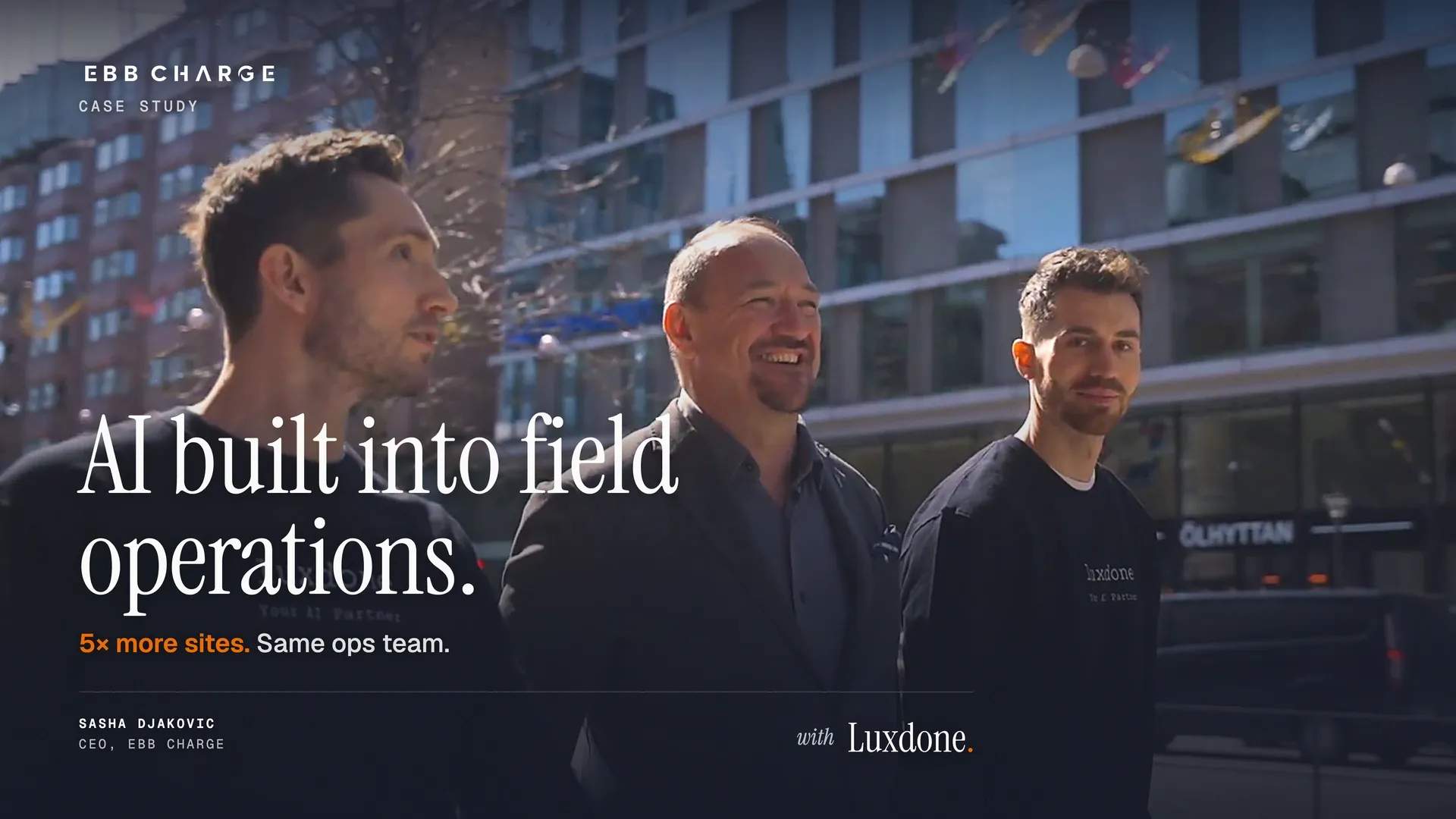
Nu skickar elektrikern på taket bara ett meddelande. Frågan ställs som vilket annat meddelande som helst, och svaret kommer inom sekunder: rätt rutin med aktuell information om uppdraget. Det ögonblicket syns i filmen ovan. För arbetslagen blev systemet den skarpaste kollegan i teamet: någon som har läst varje rutin, aldrig tappar tråden i ett uppdrag och svarar på det språk frågan ställs på.
Arbetslagen litar på systemet eftersom det har tydliga gränser. Det är bundet till EBB:s dokumentation och uppdragsinformation, inte en allmän chatbot. När svaret saknas säger det det. Det spelar roll på en arbetsplats där arbetet pågår: ett självsäkert felaktigt svar kostar mer än inget svar alls.
De splittrade systemen började fungera som en helhet, utan att ett enda verktyg byttes ut.
”Leverantörerna föreslog portaler ingen öppnar. Luxdone byggde in AI i kanalen där mitt team redan arbetar.”
Arbetet växte. Samordningsbördan gjorde det inte.
Det enkla sättet att möta tillväxt är fler samordnare, fler påminnelser och mer av ledningens tid till att förmedla information. EBB valde en annan modell: verksamheten växer medan driftteamet förblir lika stort, eftersom systemet tar hand om den återkommande samordningen.
- Laddanläggningar, från 20 mot 100
- Arbetslag på fler platser
- Kundefterfrågan och försäljningsaktivitet
- Uppdrag, frågor och uppdragsinformation som förmedlas under dagen
- Driftteamet bakom arbetet
- WhatsApp-vanan arbetslagen redan litade på
- Antalet appar montörerna behöver öppna
- Verktygen: inget borttaget, inget tillagt
- Svar om rutiner på arbetsplatsen
- Aktuell information från Monday.com ute på fältet
- En morgonsammanfattning: svar, uteblivna svar och hinder
- Ledningstid till beslut i stället för status
EBB arbetar fortfarande i den fysiska världen: arbetslag, elektriker, laddanläggningar, delar, nätanslutningar och tidsfrister. AI gör inte det arbetet. Det minskar samordningsfriktionen runt arbetet, så att verksamheten blir lättare att överblicka när den växer.
Det teamet fick tillbaka
Människorna behöll uppgifterna som kräver omdöme: platsbesök, kundrelationer och beslut som kräver någon som har sett felet förut. Nu med tid att göra dem ordentligt. Det återkommande flyttades till systemet: påminnelser, vidarebefordran, samma fråga besvarad igen och statusuppgifterna som tidigare gick genom ledningen.
Inte färre människor. Färre mänskliga flaskhalsar.
Arbetssättet att ta med sig
Nyckeln var att bygga något som faktiskt blir använt. Varje steg följer av det.
- Börja med kanalen teamet redan litar på. Den som är öppen under arbetet, inte verktyget du önskar att de använde.
- Förankra systemet i dokumentationen företaget redan använder. Rutiner, checklistor och manualer: kunskapen som håller kvaliteten jämn.
- Koppla det till aktuella uppdragsdata. För EBB var det Monday.com, så svaren har rätt sammanhang i stället för allmänna råd.
- Ge det en värdefull uppgift. Hoppa över plattformen och programmet. Välj en återkommande börda som bromsar människor varje dag.
När EBB växer mot hundra anläggningar tar samma system hand om mer av verksamheten: överlämningen från försäljning till arbetsplats, eskalering i realtid när ett uppdrag fastnar och en operativ överblick som ersätter morgonens telefonkedja. Sasha beskriver riktningen rakt: ”AI i kanalen teamet redan använder. Det är det nya ERP-systemet.”
”Luxdone förstod hur mina medarbetare faktiskt arbetar. Alla använder det, varje dag.”
Låt nästa kundberättelse handla om er.
Varje berättelse på den här sidan började med ett 30-minuterssamtal. Berätta om er situation, så berättar vi hur det första steget skulle se ut.
Prata med en grundare